
As I stood by the stove, the rich aroma of sizzling salmon filled the air, transporting me straight to a sun-drenched coastal village. This Mediterranean Salmon recipe is a celebration of vibrant flavors, combining flaky, pan-fried fish with a fresh tomato salsa that dances on the palate. Not only is this dish a healthy option, but it also comes together in less than 30 minutes, making it the star of busy weeknights and elegant dinners alike. Whether you’re a seasoned home chef or just looking to escape the fast-food rut, this delightful meal is gluten-free, low-carb, and effortlessly simple to make. So, are you ready to bring a taste of the Mediterranean to your table?
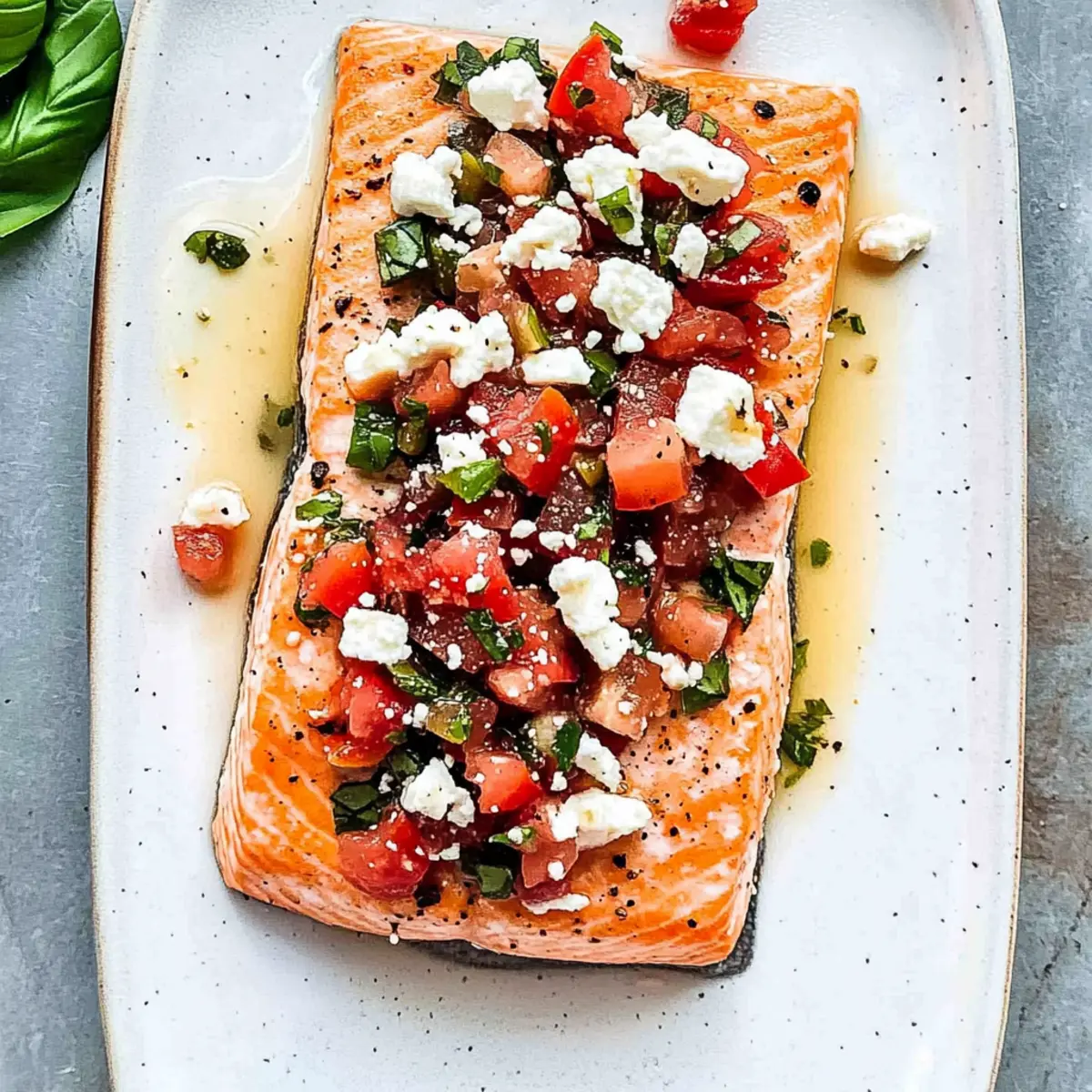
Why is Mediterranean Salmon a Must-Try?
Quick and Easy: This recipe comes together in under 30 minutes, perfect for busy weeknights when you want healthy food fast.
Health Benefits: Packed with omega-3 fatty acids and antioxidants, this salmon dish is not only delicious but also nutrient-dense.
Fresh Ingredients: The bright tomato salsa adds a zesty burst of flavor, making every bite a taste sensation.
Versatility: Feel free to swap salmon for other fish, or play with flavors by adding different cheeses or veggies to the salsa. You can even pair it with sides like roasted garlic potatoes for a complete meal!
Gluten-Free and Keto-Friendly: This recipe aligns with various dietary needs, ensuring it fits into your lifestyle while keeping dinners exciting.
Mediterranean Salmon Recipe Ingredients
• Get ready to create this flavorful dish!
For the Salmon
• Olive Oil – Adds richness and moisture; consider infused varieties for extra flavor.
• Salmon Fillets – The star of the show; opt for Alaskan wild-caught for superior taste and sustainability.
• Lemon Juice – Balances the richness; freshly squeezed is always best.
• Garlic – Provides aromatic depth; fresh minced garlic will elevate the flavor.
• Salt and Black Pepper – Essential seasonings to enhance flavor; adjust to your taste preference.
For the Salsa
• Roma Tomatoes – The base of the salsa; choose firm varieties for the best texture.
• Kalamata Olives – Adds a briny note; green olives are a delightful substitute.
• Feta Cheese – Creamy and tangy, this cheese elevates your salsa; choose reduced-fat for a lighter option.
• Fresh Basil – Brings freshness and herbal notes; parsley can be used if basil is unavailable.
• Balsamic Vinegar – Provides a touch of sweetness and acidity; red wine vinegar works as an alternative.
• Freshly Ground Black Pepper – Enhances overall flavor; customize the amount to your liking.
Enjoy crafting this Mediterranean Salmon Recipe, and let the flavors whisk you away!
Step‑by‑Step Instructions for Mediterranean Salmon Recipe
Step 1: Heat the Skillet
Begin by heating a large, heavy-bottomed skillet over medium-high heat. Add about two tablespoons of olive oil to the pan, allowing it to shimmer for a minute. This step is essential for creating a perfectly crispy exterior on your salmon fillets, which you’ll be cooking in just a moment.
Step 2: Prepare the Salmon
While the skillet is heating, pat two salmon fillets dry with paper towels. Season each fillet generously with fresh lemon juice, minced garlic, salt, and black pepper. Make sure to coat both sides evenly. You’ll want them to be flavorful and aromatic, setting the stage for the delicious Mediterranean Salmon recipe you’re creating.
Step 3: Cook the Salmon
Once the skillet is hot and the oil is shimmering, carefully place the salmon fillets skin-side down into the pan. Cook for about 5 minutes without moving them, allowing the skin to become beautifully crisp. You’ll know they’re ready to flip when the edges begin to turn opaque; this ensures a perfectly cooked fish.
Step 4: Flip and Finish Cooking
After 5 minutes, gently flip the salmon fillets using a spatula. Cook for an additional 2 to 4 minutes. The salmon should easily flake with a fork and reach an internal temperature of about 120°F. This step ensures your Mediterranean Salmon is tender, juicy, and bursting with flavor.
Step 5: Make the Salsa
While the salmon is cooking, prepare the vibrant salsa. In a mixing bowl, combine diced Roma tomatoes, sliced Kalamata olives, crumbled feta cheese, and chopped fresh basil. Drizzle in a splash of olive oil and a few teaspoons of balsamic vinegar, then add freshly ground black pepper to taste. Mix everything together until well combined for a refreshing topping.
Step 6: Serve with Salsa
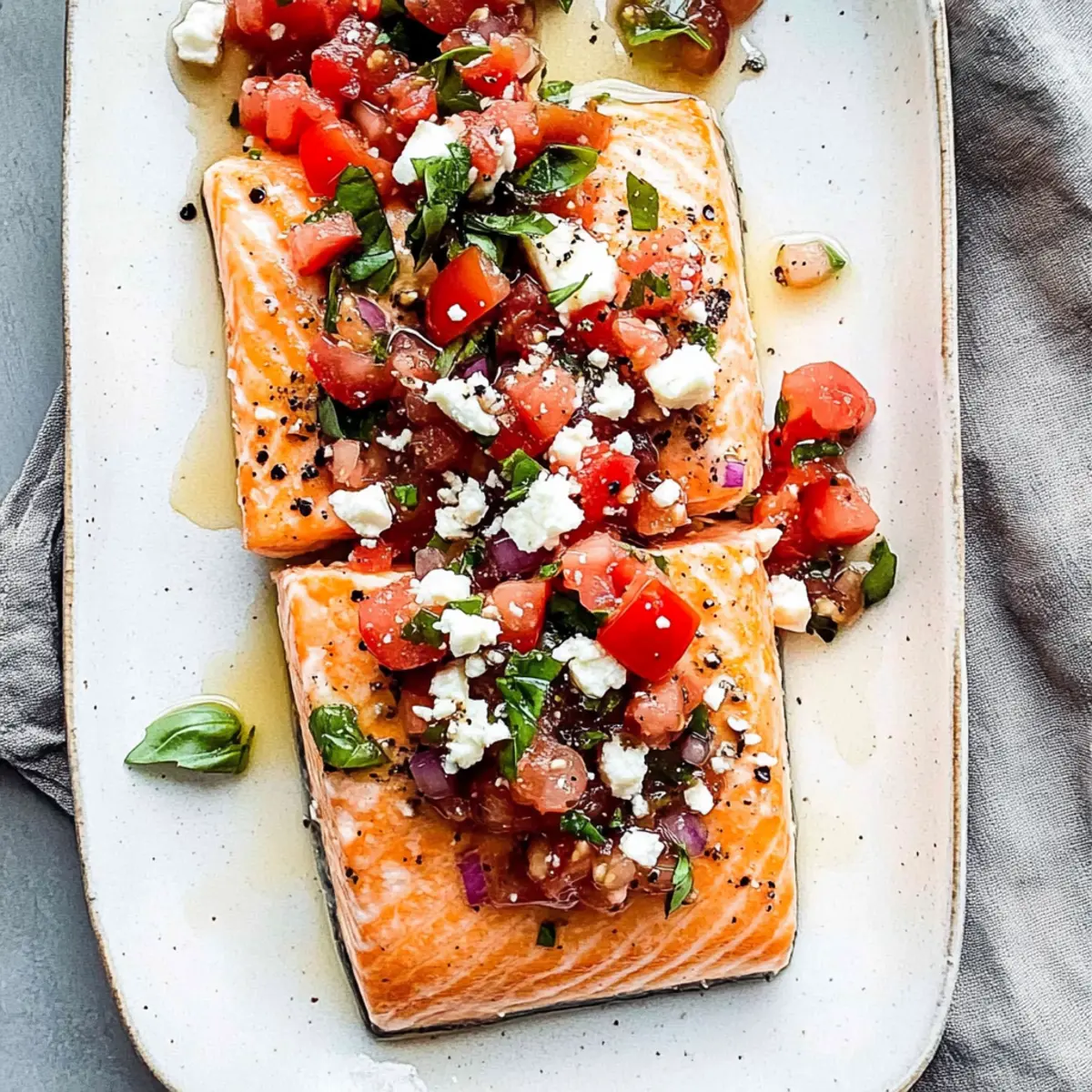
Remove the cooked salmon from the skillet and place each fillet on a plate. Generously top them with the fresh tomato salsa you’ve just prepared. The colorful Mediterranean salsa not only adds flavor but also a beautiful presentation to your dish. Enjoy your delicious Mediterranean Salmon as a quick, healthy dinner option!
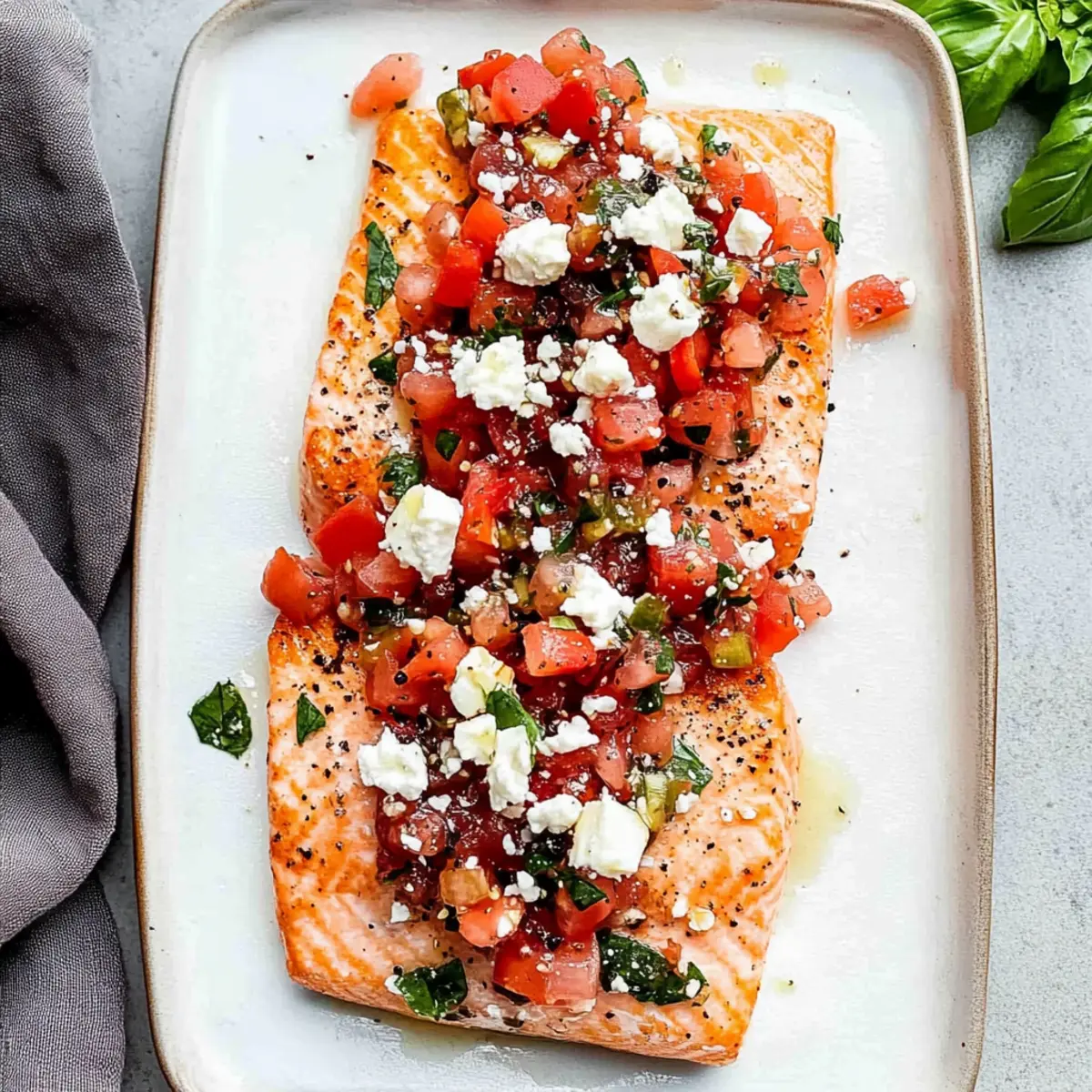
Make Ahead Options
These Mediterranean Salmon recipe components are perfect for meal prep enthusiasts! You can prepare the tomato salsa up to 3 days in advance, storing it in an airtight container in the refrigerator to maintain freshness. Just make sure to wait to add the basil until you’re ready to serve, as this will keep the flavors bright and vibrant. Additionally, you can season the salmon fillets with lemon juice, garlic, salt, and pepper and keep them stored (well-covered) in the fridge for up to 24 hours. When it’s time to cook, simply heat the skillet and finish the salmon as instructed, ensuring just as delicious results with minimal effort!
Expert Tips for Mediterranean Salmon
- Room Temperature: Allow salmon to reach room temperature before cooking; this ensures even cooking and prevents a rubbery texture.
- Avoid Overcooking: Keep an eye on the salmon while cooking. It should reach an internal temperature of 120°F and flake easily with a fork for a perfect Mediterranean Salmon recipe.
- Pat Dry: Always pat the salmon fillets dry before seasoning; moisture can prevent that beautiful sear you’re aiming for.
- Fresh Ingredients: Use fresh garlic and herbs for the salsa to maximize flavor; dried versions won’t provide the same vibrant taste.
- Use Quality Oil: Olive oil is key for richness in both the salmon and salsa—don’t skimp on quality! Opt for extra virgin for the best flavor.
Storage Tips for Mediterranean Salmon
- Fridge: Store the cooked salmon and salsa in an airtight container for up to 3 days. Keep them separate to maintain freshness and texture.
- Freezer: For longer storage, freeze the salmon without salsa for up to 3 months. Wrap it tightly in plastic wrap and then in aluminum foil or place it in a freezer-safe bag.
- Reheating: Reheat salmon gently in the oven at 275°F to prevent drying out; cover loosely with foil. Sauté the salsa briefly on the stove to warm it up.
- Thawing: If frozen, thaw the salmon overnight in the fridge before cooking. Pat dry to retain optimal flavor and texture for your Mediterranean Salmon dish.
What to Serve with Mediterranean Salmon
When it comes to creating a memorable meal, a few thoughtful sides can enhance the vibrant flavors of your Mediterranean Salmon perfectly.
-
Creamy Mashed Potatoes: The smooth texture complements the flaky salmon, providing a comforting contrast to the dish’s freshness.
-
Zucchini Noodles: Quick to prepare and gluten-free, they soak up the flavors of the salsa beautifully while adding a refreshing crunch.
-
Herbed Quinoa Salad: A light, nutty base that works well with the Mediterranean theme. Toss in some feta and olives for extra flavor!
-
Roasted Garlic Potatoes: Crispy and golden, the roasted potatoes add a hearty element that balances the lightness of the salmon.
-
Steamed Asparagus: This tender vegetable adds a splash of vibrant color while its subtle earthiness pairs beautifully with lemony salsa.
-
Cherry Tomato Salad: Simple and fresh, a salad of cherry tomatoes drizzled with olive oil and basil enhances the Mediterranean flair.
-
Chardonnay or Sauvignon Blanc: A crisp white wine elevates your dining experience, complementing both the salmon and salsa’s zesty flavors.
These delightful pairings promise to transform your Mediterranean Salmon into a feast for the senses!
Mediterranean Salmon Recipe Variations
Feel free to experiment and make this dish your own by exploring various flavor combinations!
-
Fish Swap: Substitute salmon with trout or tilapia for a different texture and flavor.
-
Cheese Twist: Try goat cheese instead of feta for a creamy and tangy variation that complements the salsa beautifully.
-
Veggie Boost: Add diced cucumbers or bell peppers to the salsa for an added crunch and freshness with every bite.
-
Herb Change: If fresh basil isn’t available, parsley or mint can step in to offer a completely different taste profile.
-
Spicy Kick: For those who enjoy a little heat, add diced jalapeños or a sprinkle of red pepper flakes to your salsa.
-
Citrus Zing: Include lime juice alongside lemon for a zesty twist that brightens the dish.
-
Texture Upgrade: Top the finished salmon with toasted pine nuts or sunflower seeds for a delightful crunch.
-
Serving Suggestion: Pair with a side of roasted garlic potatoes or a light salad dressed with olive oil to complete your meal perfectly.
Each of these variations offers a new way to enjoy this delectable Mediterranean Salmon recipe, keeping dinner exciting while indulging in that healthy goodness!
Mediterranean Salmon Recipe FAQs
What type of salmon is best for this recipe?
Absolutely! For the best flavor and sustainability, I recommend using Alaskan wild-caught salmon. This variety tends to be fresher and offers a richer taste, enhancing the overall experience of your Mediterranean Salmon dish.
How do I store leftover salmon and salsa?
To keep your Mediterranean Salmon fresh, store the cooked salmon and salsa in airtight containers in the refrigerator for up to 3 days. I often separate the salmon from the salsa to maintain the texture and flavors; this way, the salmon stays moist, and the salsa remains vibrant without getting soggy.
Can I freeze Mediterranean Salmon?
Yes, you can freeze the salmon! Wrap the cooked salmon tightly in plastic wrap, followed by aluminum foil, or place it in a freezer-safe bag. It can be frozen for up to 3 months. For best results, thaw it overnight in the fridge before reheating to retain its wonderful texture.
What if my salmon is overcooked or undercooked?
Don’t worry; it happens to the best of us! If your salmon is slightly overcooked, don’t panic—try adding a squeeze of fresh lemon juice to restore some moisture. If it’s undercooked, simply return it to the skillet for another minute or two, checking frequently until it flakes easily with a fork and reaches an internal temperature of 120°F for perfect doneness.
How can I make this dish suitable for my gluten-free or keto diet?
Very easily! This Mediterranean Salmon recipe is inherently gluten-free and low-carb because it features fresh, wholesome ingredients without any added fillers. Ensure that any condiments you use, like balsamic vinegar, are certified gluten-free. For those on a keto diet, the healthy fats from salmon and olive oil make it a delicious choice without worrying about carbs.
Can I use frozen salmon instead of fresh?
Of course! If you’re using frozen salmon, be sure to thaw it overnight in the refrigerator for the best texture. After thawing, pat it dry before seasoning and cooking; this prevents extra moisture that can hinder that perfect sear. Enjoy your Mediterranean Salmon recipe even when time is short!
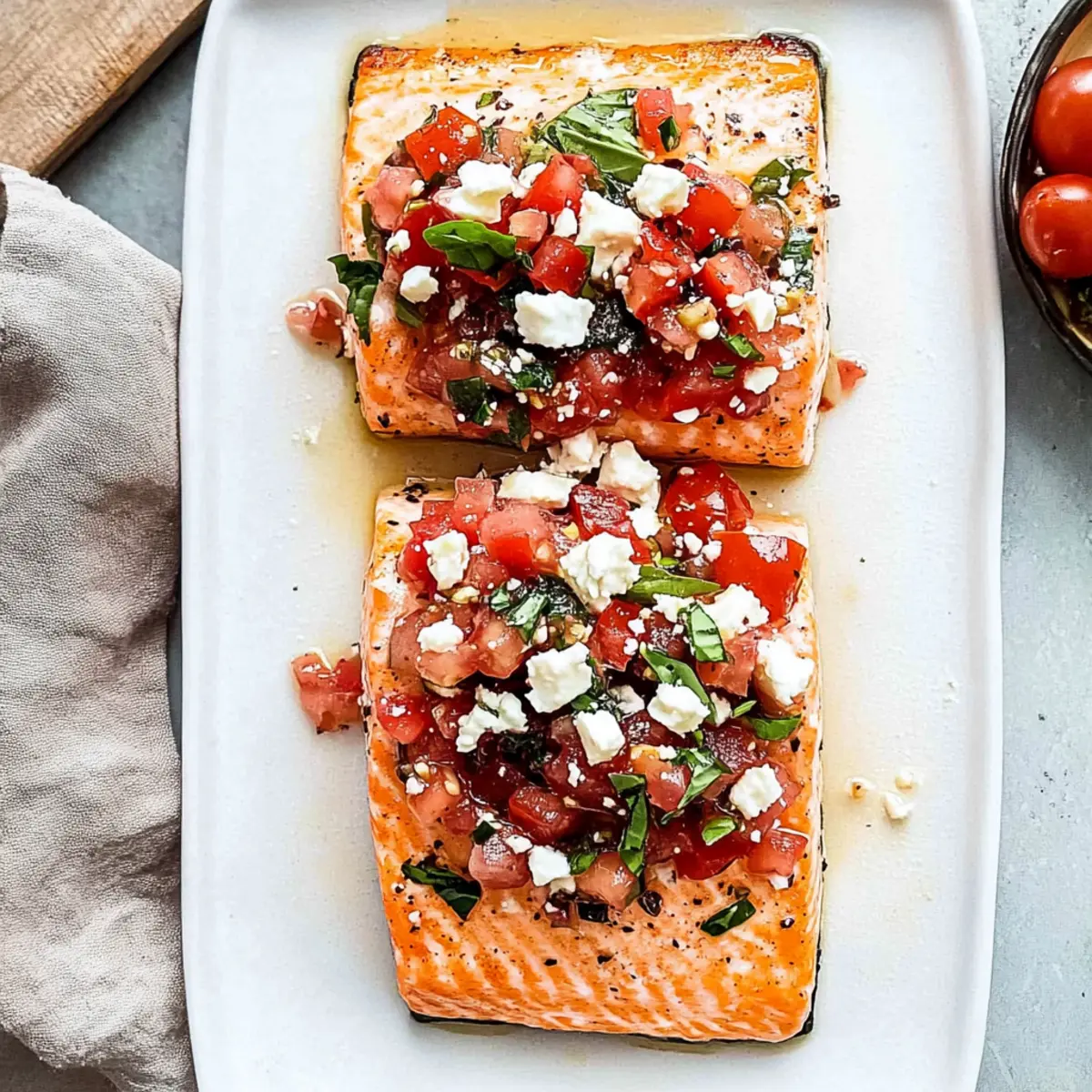
Mediterranean Salmon Recipe: Quick, Healthy Flavor Explosion
Ingredients
Equipment
Method
- Heat a large, heavy-bottomed skillet over medium-high heat. Add about two tablespoons of olive oil, allowing it to shimmer.
- Pat the salmon fillets dry, season with lemon juice, garlic, salt, and black pepper.
- Place the salmon fillets skin-side down in the hot skillet. Cook for about 5 minutes without moving.
- Gently flip the salmon fillets and cook for an additional 2 to 4 minutes until flaked easily with a fork.
- In a bowl, combine diced Roma tomatoes, Kalamata olives, feta cheese, and basil. Add olive oil and balsamic vinegar, mixing until combined.
- Place the cooked salmon on plates and top with the fresh tomato salsa before serving.